

When we think of play, we might imagine blocks, dress-up, dolls, puzzles, or kids running around outside. It’s easy to see play as just something fun children do after the “real learning” is done.
But for young children, play is actually learning.
Play is one of the main ways children understand the world. While playing, they explore, experiment, make decisions, solve problems, talk with others, and figure out how things work.
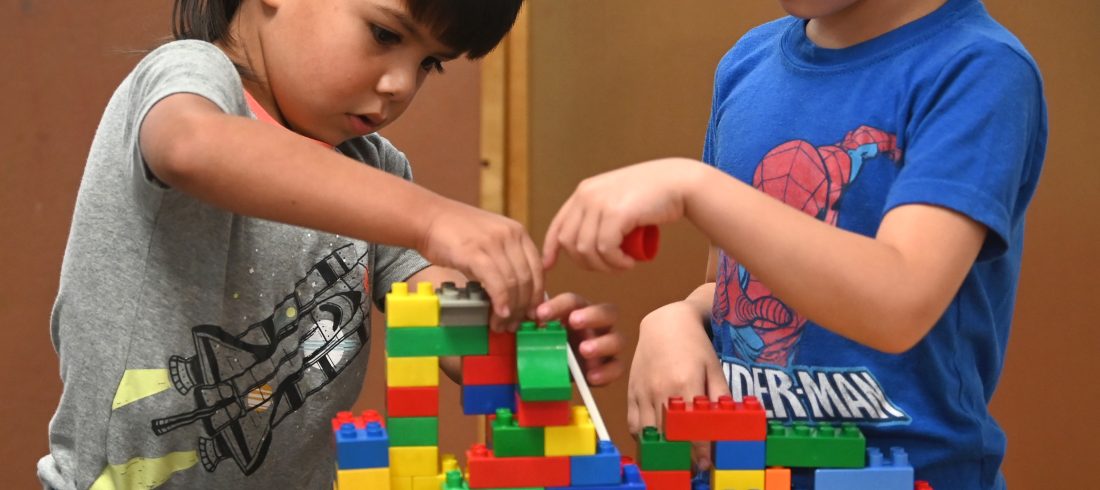
Pretend play helps children build language and social skills. When they build with blocks, they develop spatial thinking and problem-solving. Playing outside improves coordination, confidence, and lets them take safe risks. Even doing the same activity over and over helps kids practice, try new ideas, and get better at things.
Play also helps children learn skills that are hard to teach directly. They figure out how to handle frustration when a tower falls, work things out when two kids want the same toy, wait their turn, change plans if something doesn’t work, and keep trying when things get tough.
Play helps children grow in every way.
It supports thinking, language, physical skills, creativity, independence, and social-emotional growth. Just as important, play lets children be curious, make choices, and feel proud when they figure things out on their own.
Play doesn’t have to be complicated. A cardboard box, a pile of leaves, a bucket of water, or a few blocks can all give children great chances to learn. What matters most is giving them time and space to explore.
So when you see your child really focused on play, remember—they aren’t taking a break from learning. They are learning.
Over the next few months, in the “Why Behind the Play” series, we’ll look more closely at different kinds of play, like messy play, sensory play, pretend play, outdoor play, and building play. We’ll also explore the important skills children develop through each type.
Because sometimes, the most important learning happens when it just looks like play.